


Using data to improve outcomes

A question we get asked sometimes is "Do we have to vote?" and the answer is: no. You can still access our 200+ lessons and assemblies without ever needing to vote, and you can also skip a vote if you are short on time. However, adding the voting process into your school not only teaches your pupils what democracy looks like in practise, but also helps you to understand your pupils in a way that no other platform, programme or scheme can.
Take one real question we've asked: "Do you know what a healthy relationship looks like?"
Here's what the data actually showed one school, three different ways.
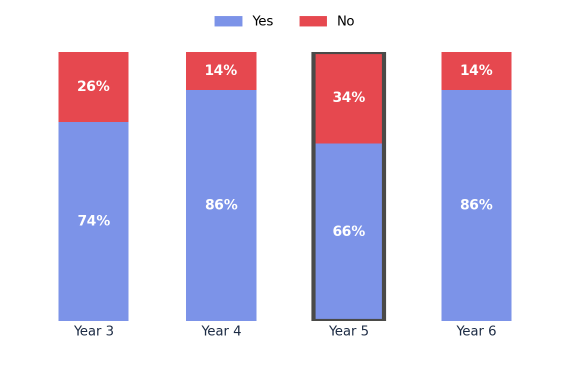
In this school, 34% of Year 5 pupils said they don’t know what a healthy relationship looks like. Access to this data means you can immediately see where intervention could be useful to help individual classes.
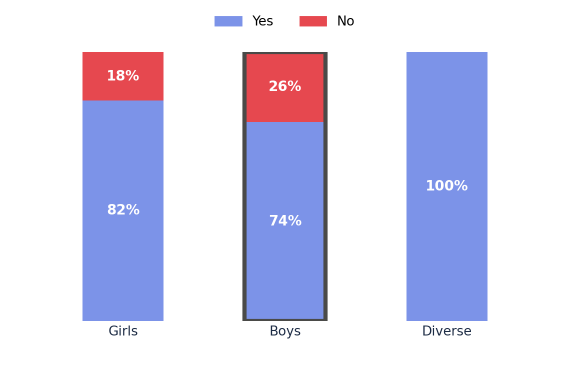
A quarter of boys said no, against 18% of girls. You can use filtering to compare your school's groups of pupils side-by-side. A three-form Primary can compare 3B against 3T; a Secondary with mixed-age vertical forms compares class by class to spot where pupils need support.
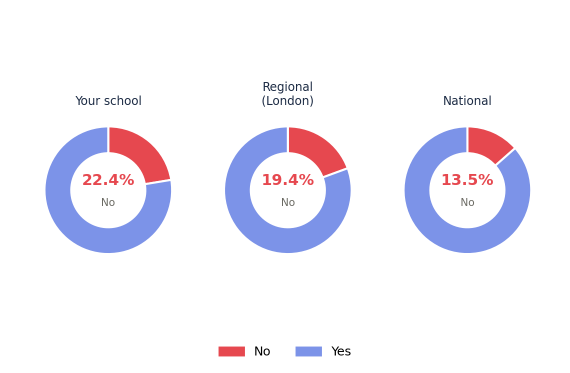
Set against your region and the national picture, this school sat at 22.4% - against 19.4% regionally and 13.5% nationally. That's the difference between wondering if your pupils are aligning with trends, and knowing exactly where the differ from pupils across the country.
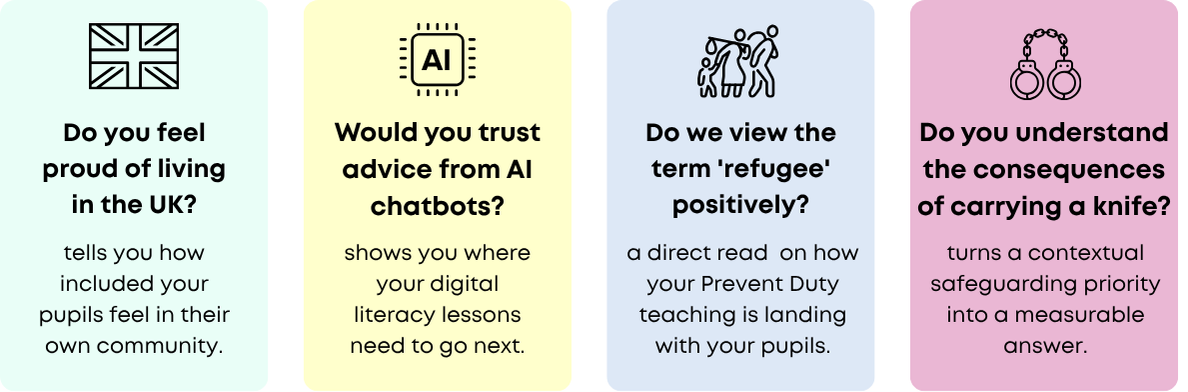
Healthy relationships is one question out of hundreds. Every single week, we produce a completely new lesson based on what's happening in the world today, so that you can build an image of what your pupils think about a range of issues - such as:
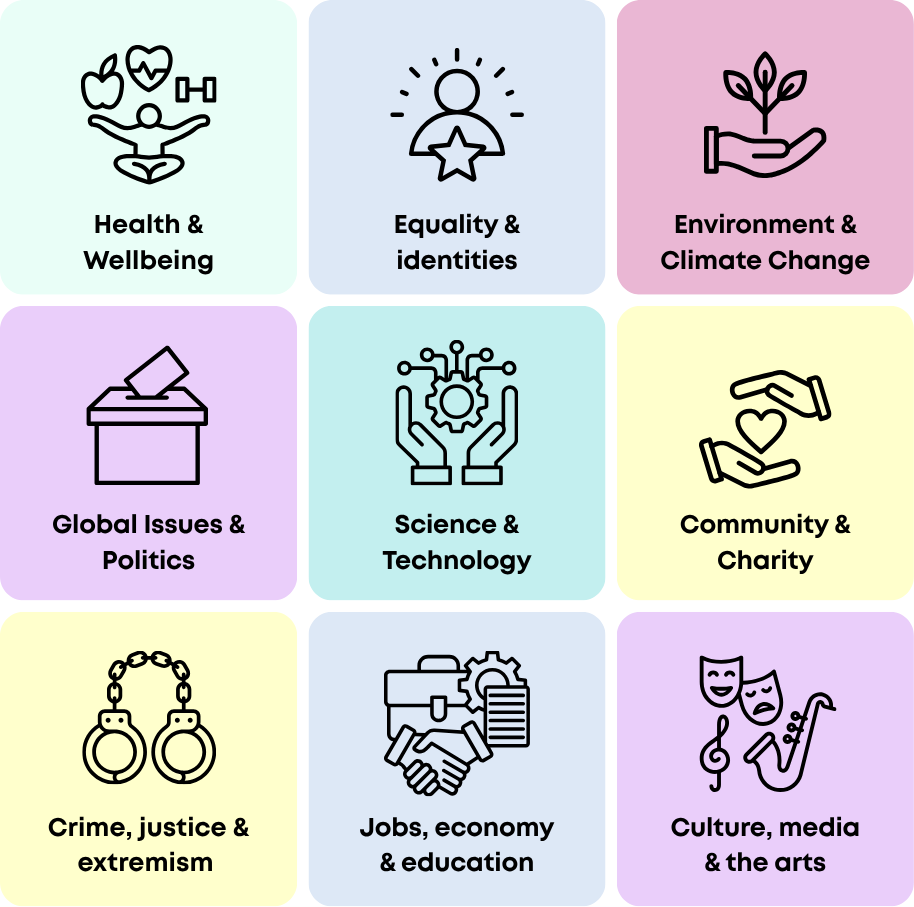
Being ready for life beyond the school gates means having the knowledge and understanding of a range of different issues they will encounter in adulthood. To make sure that our pupils have this breadth of experience, we map our lessons across nine key themes.
So while topics such as knife crime and extremism are revisited every year, they're always given a new angle. This not only helps broaden your pupils' understanding of the issue, but also helps create a fuller data picture for the school tracking their personal development.
VotesforSchools helps you find out what your pupils actually believe, and plan for it before it becomes a problem.
Every vote is anonymous, which is exactly why the data is worth looking at, pupils answer more honestly when they know it can't be traced back to them. That honesty shows up as real data, broken down by year, class and gender, and set against how the rest of the country answered the same question.
By taking part in the vote, you're creating a true image of what your pupils believe, and are able to intervene when you see a trend appear, not after an event has happened. For example, if you see one year group report strongly that carrying a knife makes them feel safer, you can plan your intervention within this group, knowing your intervention will be targeted, effective, and meeting the needs of your pupils.
PSHE Coordinator at Wales High School
Pupil at Silsden Primary School
Pupil at Elm Park Primary School
Boundary Oak School
Eden Boys School
Most schools who want this kind of insight would have to build their own survey, chase pupils to fill it in, then find time to actually analyse it, if they get around to it at all. Every VotesforSchools lesson already asks pupils something real, every week. You're not launching a new project to find out what your pupils think. You already asked them.
Yes. Every vote is anonymous, even to your own staff - nobody in your school can trace an answer back to a specific pupil. What you see is aggregate: broken down by year group, class or gender, never by name.
No - comments are anonymous at pupil level, even to us. We can tell you which school and roughly which class or year group, so your own staff can take it from there.
Yes - every comment pupils submit is read by our own qualified teachers, not just left sitting in a dashboard.
Weekly, not in real time. If you need to know about something the moment it happens, that's still down to your own staff hearing it live in the room and your existing referral process. Our review is a second layer on top of that, not a replacement for it.
Yes. A DSL, a SENCO, a Head and any member of staff can each have their own account and their own view into the data & resources, rather than one person holding the login and forwarding screenshots to everyone else.
It doesn't replace your existing safeguarding policy - it sits alongside it. The data points you toward a year group or class worth a closer look; your staff, hearing the actual discussion in the room, are still the ones who spot an individual pupil needing support. Full detail on how the two connect sits on our Safeguarding & DSL page.
Beyond your own school's results, we publish a weekly national report showing how schools across the country voted, and share the aggregate picture with organisations and government bodies working on that topic - never anything that could identify an individual pupil or school. Exactly what we collect and the legal basis for each is set out in full in our privacy policy.
Start your free trial today to start collecting, and using, data.
Trial