Want to try our resources? Sign up for our 14-Day Free Trial

Should the Winter Olympics use fake snow?

30th January - 06th February 2026

Back to results

14077

5-11 votes

47934

11-16+ votes

62011

Total votes

As the Winter Olympics takes place across northern Italy this month, questions have been raised about the environmental and safety costs of hosting the games in unpredictable conditions. Increasingly, fake snow is being used to ensure the competition can go ahead, with organisers planning to use more than 3 million cubic yards of artificial snow to ensure surfaces are competition-ready. Critics have raised concerns about the immense amount of energy and water it takes to make and also the more dangerous conditions it can lead to for athletes, whilst advocates have praised it for its reliability, faster racing opportunities and ability to balance enough snow with clear weather conditions. We asked young people to weigh in on the debate and decide whether they think it should continue to be used in future Olympics.

Primary 5-11, Secondary, 16+ & College voters were asked: “Should the Winter Olympics use fake snow?”

62,011 young people in the UK have taken part in this vote.

Age 5-11 voter

I voted no because to much water is wasted. I've skied on the fake snow and it is icier! If it's hurting the environment its not worth it.

Age 11-16+ voter

People pay a lot of money to see the winter games so imagine being sent home because there was no snow.

Age 11-16 voter

Age 11-16 voter

Organisers should host the events where there is reliable snowfall. Producing the fake snow takes an awful toll on the environment. Fake snows ruins the point of the Winter Olympics.
51% of 7-11-year olds said climate change worries them often.

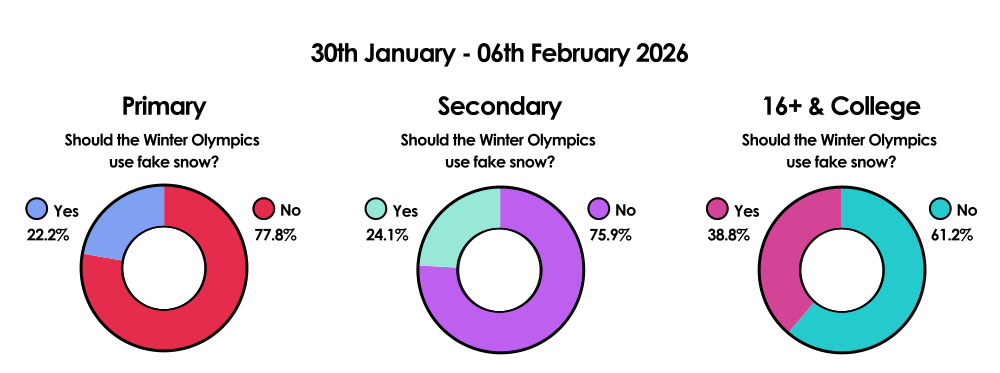
  • All voters discussed the question, "Should the Winter Olympics use fake snow?" and all responded 'No' in the majority.
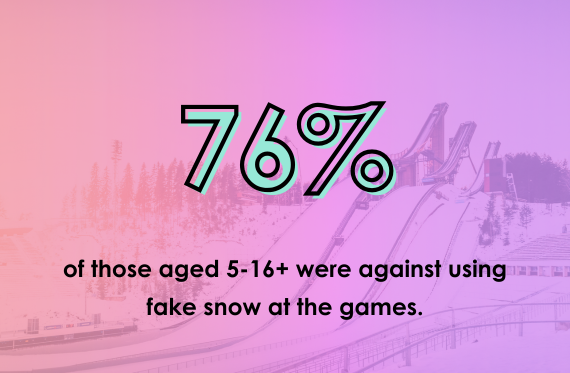
  • 3 in 4 students voted 'No', with many expressing concerns about the negative climate impact.
  • Others were worried about the potential danger to athletes, as artificial snow often leads to icier and faster conditions.
Meanwhile, 64% of Secondary students disagreed, voting No to the question, "Does climate change worry you often?"

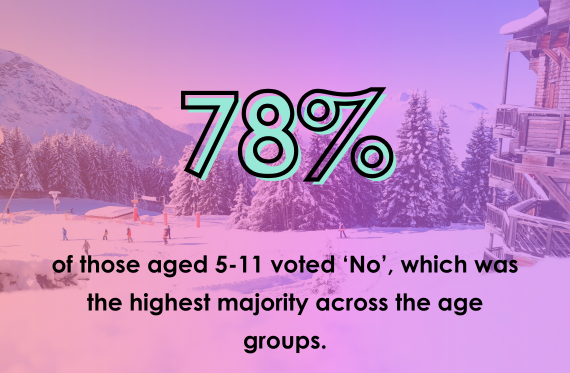
  • Primary pupils were the most against, with 78% voting 'No'.
  • Conversely, 16+ & College voters had the slimmest 'No' majority, with 39% voting in favour of the use of fake snow.
  • For 'Yes' voters, as the Winter Olympics only takes place over a short period of time every 4 years, the potential climate consequences weren't seen as too significant.
  • Some 'Yes' voters thought a compromise could be limiting the amount of fake snow used, to avoid situations like Beijing in 2022.
Many said they worries, but not often as other daily stressors took precedence, such as the rising cost of living.

  • Around 1 in 4 students were in favour of using artificial snow to ensure the games could go ahead, with some highlighting how frustrating last-minute cancellations could be for spectators and competitors alike.
  • Some students argued the Winter Olympics could still take place without artificial snow, if hosting responsibilities were limitied to places with reliable snowfall each year.
results