


E-scooters seem to be everywhere
On roads, outside train stations, in cycle lanes and, despite the complaints they cause, on pavements too. E-scooters have become a familiar sight in towns and cities across the UK.
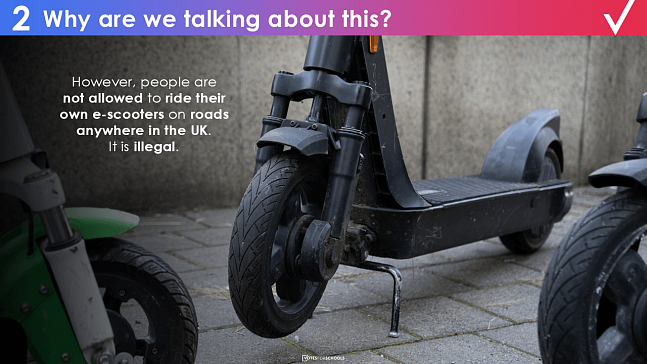
So it might come as a surprise to learn that riding your own e-scooter anywhere in public, including on roads, pavements or cycle lanes, is currently illegal in the UK. Privately owned e-scooters can only be used on private land, with the landowner’s permission.
Rental e-scooters are the exception. They can be used as part of Government-approved trials in some areas, although riders need to meet certain requirements, including having a full or provisional driving licence.
It’s an odd situation. Around 1.2 million people aged 16 and over in England own an e-scooter, but those owners aren’t allowed to ride them in public.
Does the law need to keep up with reality?
There are plenty of reasons people want to use e-scooters. They can be cheaper than other forms of transport, useful for shorter journeys and an option for people who don’t drive. One of the arguments put to pupils this week sums it up neatly: “Scooters are everywhere, the law needs to keep up with the reality.”
But making them legal wouldn’t settle the issue. There were 1,377 reported collisions involving e-scooters in Great Britain in 2025, up from 1,312 the year before. Ten people were killed and an estimated 484 were seriously injured in e-scooter collisions. There are questions about insurance too, particularly what happens to someone who is injured in a collision if the rider isn’t insured.
Then there are the rules. If private e-scooters were allowed on roads, should riders have to wear helmets? Should there be an age limit or speed limit? Should you need a licence? Should e-scooters have number plates? And where should they be allowed to go?
Six years after e-scooter trials began, these questions are still hanging around. As our 16+ VoteTopic points out, decisions about legalising e-scooters have been delayed repeatedly since 2020.
What do young people think?
This week, our secondary and 16+ voters are considering “Should e-scooters be legalised on roads?” For our 7–11 voters, the question is “Should e-scooters be allowed on roads?” It’s an interesting one to put to young people because many of the arguments affect them directly. An e-scooter could offer a cheap way to get around for someone who can’t drive yet. At the same time, questions about the age and experience of riders form part of the argument against legalisation. Our oldest voters are also looking at the case of Carly Calland, who has campaigned for tighter rules after her 14-year-old son Jacob died following an e-scooter collision in 2025.
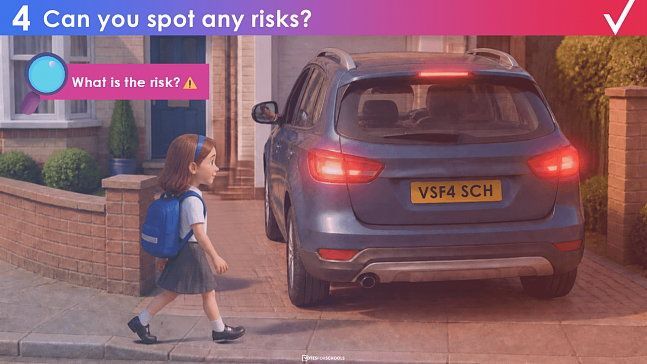
E-scooters are part of the conversation for our youngest voters too, but we're starting somewhere closer to home. Our 5–7 pupils are being asked “Do you need more road safety lessons?” They’ll begin with the things they might see on the roads around them, from traffic lights and crossings to cars and scooters, and think about what helps them stay safe.
Our voters will decide where they stand, and their results and comments will be shared with the Department for Transport, PACTS, Road Safety GB, the Child Accident Prevention Trust and the Metropolitan Police.
After all, e-scooters are already part of life on our roads. The question now is what the rules should be.